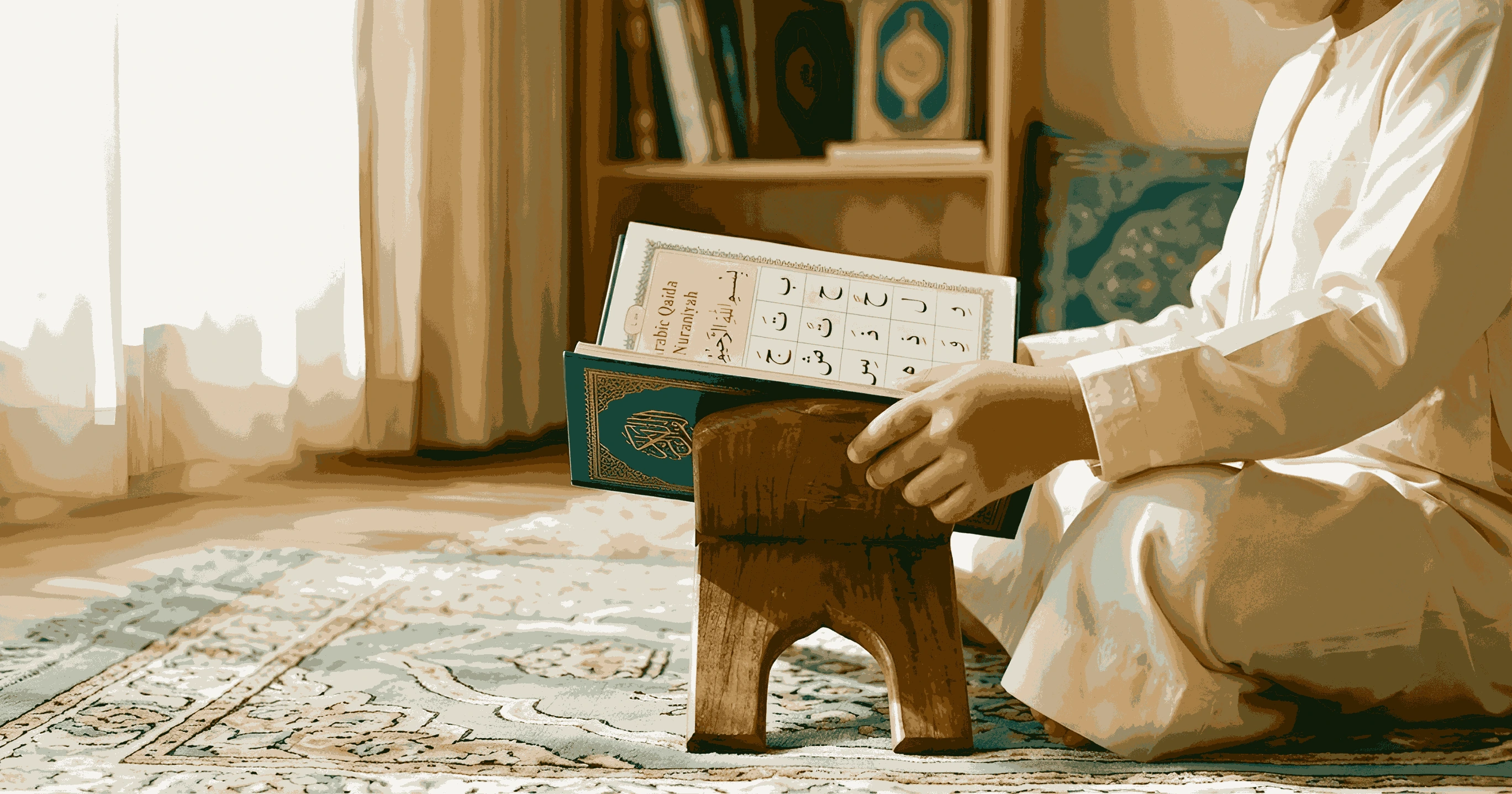
A Parent's Guide: How to Start Noorani Qaida for Kids?

By Ummah Learning Hub
March 25, 2026 • 8 min read
"The best among you are those who learn the Quran and teach it."
— Sahih Al-Bukhari (5027)
As Muslim parents, one of our greatest aspirations is to see our children read the Book of Allah beautifully and correctly. The journey of a thousand miles begins with a single step, and for Quranic recitation, that foundational step is the Noorani Qaida.
However, introducing a new language and script to a young child can be overwhelming. Mothers often ask us: "When is the exact right time?", "How do I make sure they don't lose interest?" and "What if my own Tajweed isn't perfect?" Here is a detailed, practical guide to help you start this blessed journey smoothly.
1. What is the Right Age to Start?
Every child is unique and develops at their own pace, but generally, the age of 4 to 5 years is considered ideal. At this age, children are already learning shapes and sounds in their secular schooling. Their minds are like sponges, ready to absorb the visual shapes of the Arabic alphabet (Huroof). If your child shows interest earlier, you can gently introduce the letters through audio playing in the background or visual blocks, but formal sitting should not be forced too early.
2. Teach the Adab (Respect) First
Before a child even opens the Qaida, they must understand its value. Teach them the basic Adab of learning Deen. Dedicate a specific, clean corner in your home for this purpose. Show them how to do a simple Wudu (even if it's just washing face and hands for habit), how to sit respectfully, and how to place the Qaida on a Rehal (wooden stand) rather than on the floor. When they see you treating the book with immense respect, they will naturally do the same.
3. Focus on Makharij (Pronunciation) from Day One
The biggest and most common mistake parents make is rushing to finish the Qaida so the child can "start the Quran." Remember, quality always over quantity. Arabic has unique sounds that don't exist in English or Urdu.
If a child learns to pronounce a heavy 'Haa' (ح) and a light 'Haa' (هـ), or 'Qaaf' (ق) and 'Kaaf' (ك) exactly the same way in the beginning, it becomes incredibly difficult to unlearn and correct it years later. Ensure that whoever is teaching them focuses heavily on the correct articulation points (Makharij) right from the very first lesson.
4. Lead by Example (Role Modeling)
Children are the best imitators. If they never see their parents opening the Quran, it becomes difficult for them to build a connection with it. Let them see you reciting your daily portion. When they see their mother or father sitting peacefully with the Quran, it creates a subconscious desire in their little hearts to do the same.
5. Keep Sessions Short and Consistent
A young child's attention span is very short. A 15 to 20-minute focused and happy session is far better than a strict, crying-filled hour. Consistency brings Barakah. Make it a daily habit, perhaps right after Asr or Maghrib prayers, so it becomes a natural, expected part of their daily routine rather than a chore.
6. Make it a Positive Experience (Extreme Sabr)
The Quran should always be associated with love, peace, and reward—never with fear, shouting, or punishment. Use lots of praises (Mashallah, Barakallah), stickers, and small weekly rewards. If they struggle with a specific line or letter, practice Sabr (extreme patience). Smile, close the book, and tell them "We will try this again tomorrow, you did great today!"
Struggling to Teach Them Yourself? We Can Help!
Finding the right teacher who is both patient enough for kids and highly qualified in Tajweed is challenging. At Ummah Learning Hub, we understand a mother's concern.
We are thrilled to announce our New Online Noorani Qaida Batch for Kids!
- Small Batches: Maximum personal attention for every child.
- Expert Female Tutors: Highly patient and trained in teaching kids.
- Tajweed Focused: Correct Makharij practice from day one.
- Interactive & Child-Friendly: Making learning a joyful experience.